Gravel rim width and tire choice: a compatibility checklist
Choose gravel tires and rim width together. Check tire size, hooked or hookless requirements, pressure limits and frame clearance before requesting a build.
Choose the tire you need for your route, then check which rims support that exact tire. Buying the widest rim first can leave you with fewer useful options, especially if you also want to fit a narrower tire for road rides. Your shortlist should name a tire model and size, a rim model and width, and the permitted operating conditions for the pair.
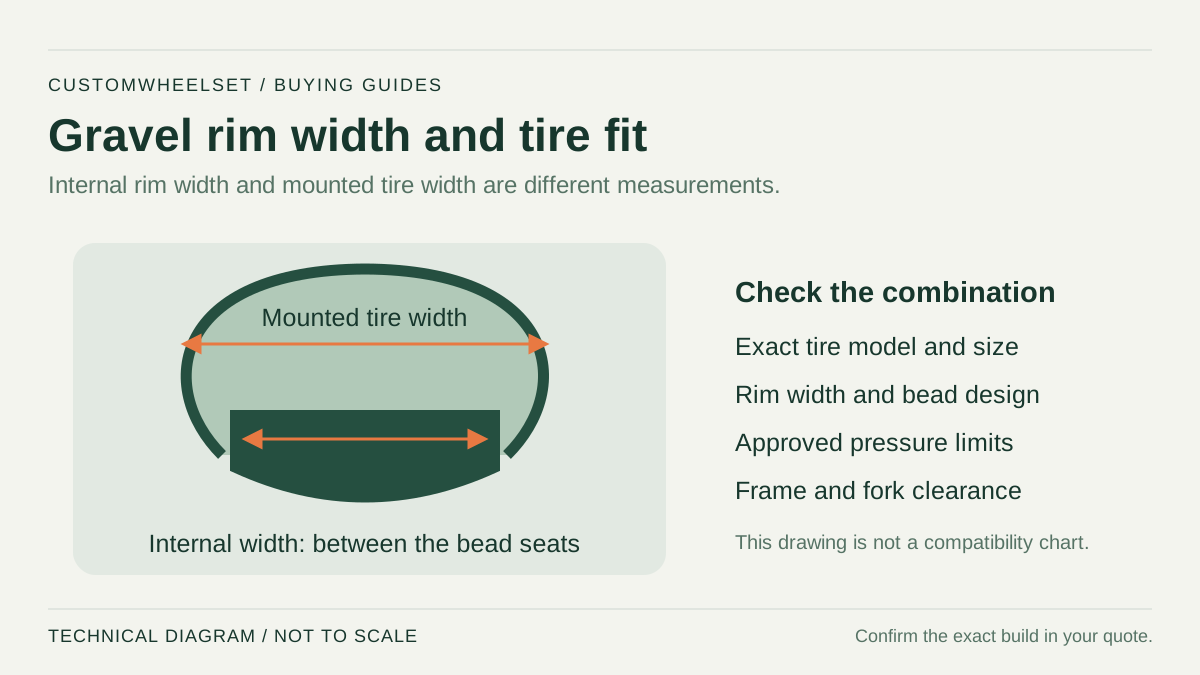
The diagram distinguishes internal rim width from mounted tire width in a wheelset discussion. It is a schematic rather than a photograph or an approved tire-and-rim combination.
Which rim width matters for tire compatibility?
Internal rim width is the dimension used in tire-and-rim combination charts. External width describes the outside of the rim; it cannot substitute for the internal figure. Schwalbe also explains that the tire's inner diameter must match the rim's shoulder diameter, and that tire width and internal rim width must match. Schwalbe tire-dimension guidance.
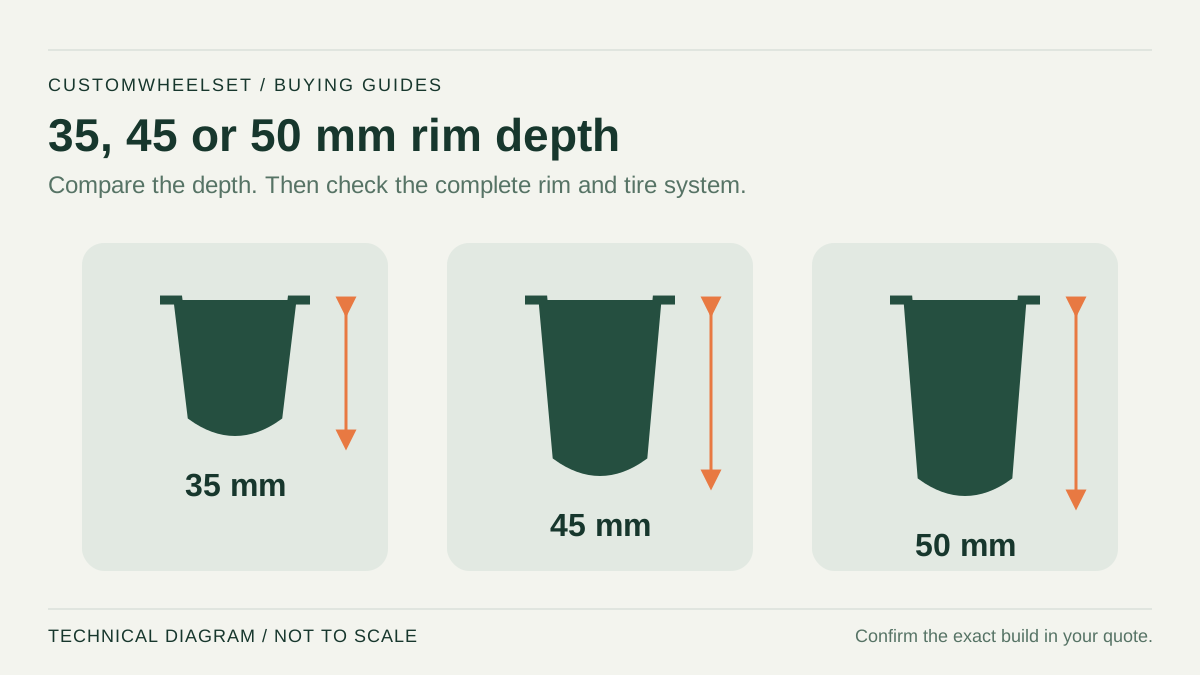
Record the full tire size marking instead of only "700C gravel tire." When comparing two wheels, keep diameter, internal width and depth in separate columns. A 35 mm depth label is not an internal-width specification.
DT Swiss recommends choosing the intended tire width before rim inner width. It describes how an appropriate combination can support a wider tire at lower pressure, while also requiring enough frame space. That guidance supports choosing the pair together; it does not mean that every wider rim improves every tire. DT Swiss inner-width guidance.
How to check a tire-and-rim pair
Use the Schwalbe ETRTO-based combination chart to locate the tire-width row and internal-rim-width column. The linked PDF is dated June 2022, so consult the current tire and rim instructions as well. The chart explicitly requires attention to the rim manufacturer's maximum pressure and tire-type specifications. A dimensional match is one check, rather than permission to ignore model-specific restrictions.
Before buying, record answers to these questions:
| Check | Evidence to obtain |
|---|---|
| Diameter and width | Full tire size and exact rim dimensions |
| Tire interface | Hooked or hookless rim, plus approved tire type and model |
| Operating pressure | Applicable limits from both manufacturers |
| Bike clearance | Frame and fork requirements for the installed tire |
| Intended use | Manufacturer permission for your terrain and total load |
If the documents disagree or leave a field unanswered, send the exact model names to the manufacturer or build reviewer. Keep the answer with the quote. Successful inflation on another rider's wheel does not answer these checks for your proposed build.
Can I use an ordinary tire with a tube on a hookless rim?
A tube does not remove the tire compatibility requirement. Schwalbe's combination chart requires TLE/TLR tires on hookless rims even when used with an inner tube. Zipp likewise specifies TSS-compatible tires for its TSS wheels and permits tubes only with those compatible tires. Apply each manufacturer's instructions to its own product. Schwalbe chart, Zipp hookless compatibility guidance.
For a hooked rim, confirm the permitted tire and tube or tubeless setup too. The hooked label alone is not an approval for any tire you happen to own. When you plan to alternate road and gravel tires, check both exact tire models before choosing the wheelset.
Will a tire marked 40 mm actually fit my frame?
The printed width is insufficient for a clearance decision. Schwalbe notes that pressure and expansion after fitting affect tire width, and measures width at the widest point, including tread lugs. Check the installed tire against the bike manufacturer's clearance requirements, including the space needed for your intended riding conditions. Schwalbe's explanation of measured tire dimensions.
Use your current setup as a record: exact tire, rim inner width, measured tire width and remaining clearance. It gives the reviewer something concrete to compare. It cannot guarantee the dimensions of a different tire or rim.
Compare gravel reference builds without treating ranges as approval
The gravel catalog lists the G35 Adventure with a 35 mm depth, 25 mm internal width and hooked tubeless-ready interface. The G40 All-Road lists a 40 mm depth, the same 25 mm internal width and a hooked tubeless-ready interface. Both list 35-50 mm recommended tire sizes as planning fields. Those ranges do not establish approval for every tire model or frame.
Use the wheelset finder to narrow the catalog by your riding brief, then the comparison tool to review shortlisted fields. Include your preferred tire in the quote request and ask for the exact rim, compatible setup, pressure limits and permitted use in writing. Select an operating pressure only after that combination has been confirmed; this guide provides no universal gravel pressure.
Sources and limits
Reviewed on 10 October 2026 against the official Schwalbe, DT Swiss and Zipp sources linked beside the relevant claims. The checklist is editorial guidance. CustomWheelset catalog values remain planning estimates; this article does not certify a tire-and-rim pair or establish a load rating.
Related posts
Choose rim depth, tire fit, freehub, hubs and spokes with source-backed buying guides. Compare catalog builds before requesting a written quote.