35 vs 45 vs 50 mm road wheels: choosing rim depth
Compare 35, 45 and 50 mm road wheel depths for your routes, wind exposure and tire choice, then prepare a useful custom wheelset quote request.
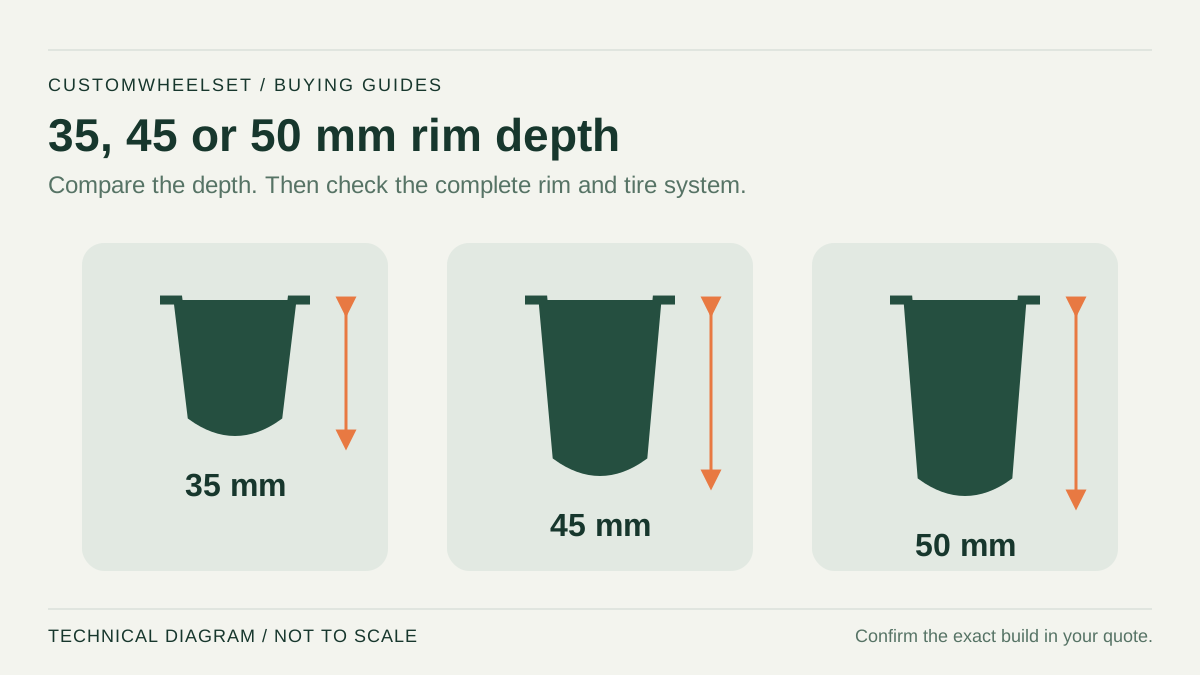
Start your road wheel shortlist with the rides you repeat every week. Consider 35 mm when exposed routes and climbing shape your choice, 45 mm when you want one pair for mixed road riding, and 50 mm when you are comparing builds for flatter racing routes. These are editorial starting points, not a performance ranking or a promise about how a particular wheel will handle.
The diagram compares nominal rim depths. It is a schematic, not a photograph of a finished build or a measurement of aerodynamic performance.
What rim depth can tell you
DT Swiss describes a general tradeoff: deeper road rims can offer an aerodynamic advantage, while shallower rims generally use less material and present less area to side winds. Its guide groups rims below and above 45 mm; that boundary does not establish a universal optimum at exactly 45 mm. Specific rim designs still need their own evidence. DT Swiss rim-height guidance.
Use the following questions to organize a comparison. The recommendations are our decision guidance, rather than results from CustomWheelset testing.
| Depth to shortlist | A reason to consider it | Question to resolve before ordering |
|---|---|---|
| 35 mm | You prioritize climbing routes or feel cautious in gusts | What are the finished build weight and handling evidence? |
| 45 mm | Your rides mix hills, longer distances and rolling roads | Does this exact rim suit your intended tire? |
| 50 mm | Your main goal is a road-racing or flatter-course build | Is there relevant aero evidence, and are you comfortable with its handling? |
Write down your usual route rather than the event you ride once a year. A rider who spends weekdays on exposed lanes and enters one summer race has a different brief from a rider training for repeated flat races. Include where you currently feel uncertain, such as descending through gaps in hedges.
Is 50 mm always faster than 35 mm?
Depth alone cannot settle that comparison. ENVE explains that its SES system uses different front and rear rim shapes, with a wider, shallower front rim for stability and a deeper rear rim for drag reduction. That is evidence about ENVE's design approach; it does not prove that any two rims sharing those depths will behave alike. ENVE's explanation of SES wheel shapes.
For a useful aero comparison, ask whether testing used the same tire, tire width, bicycle and conditions. A watt figure without its test setup is hard to apply to your ride. If the supplier has no comparable data, record aerodynamic performance as unverified. You can still choose by fit, price and the intended use, but you cannot calculate a defensible speed gain.
Is 45 mm a sensible choice for one wheelset?
It is a reasonable comparison candidate when your brief covers several kinds of road riding. Treat it as a place to begin, then check the complete build. A 45 mm label says nothing by itself about the hub, spoke selection, tire interface or finished weight. If one of those details rules the build out, the midpoint depth has not solved the problem.
Before narrowing the list, enter your riding needs in the wheelset finder. Then use the wheelset comparison tool to review the catalog fields side by side. The tools organize reference builds; a shortlist still needs a written specification review.
Compare the actual reference builds
The current road catalog includes these starting configurations. The dimensions below are catalog planning fields, subject to confirmation in the written quote.
| Reference build | Front / rear depth | Internal / external width | Listed tire interface |
|---|---|---|---|
| R35 Climbing | 35 / 35 mm | 23 / 30 mm | Hooked tubeless-ready |
| R45 Endurance | 45 / 45 mm | 24 / 31 mm | Hooked tubeless-ready |
| R50 Aero | 50 / 50 mm | 23 / 31 mm | Hooked tubeless-ready |
Their names describe catalog positioning. They are not independent evidence of climbing, endurance or aerodynamic performance. These reference builds also list different default configurations, so an estimated weight or price difference cannot be attributed only to depth.
What should go into the quote request?
Send the bike make, model and year, your current wheels, and the exact tire model and size you want to use. Include the axle standards, cassette model and rotor interface. If you are uncertain about a standard, state that explicitly rather than selecting the closest-looking option.
Describe your regular terrain and wind exposure, rider and luggage weight, and whether you want a single everyday wheelset or a separate event setup. Ask the reviewer to confirm the exact rim, compatible tire specification, pressure limits and permitted use before payment. Request a complete build weight estimate with its scope, including whether tape and valves count. Website figures remain planning estimates until confirmed in writing.
Sources and limits
Reviewed on 10 October 2026 using the official DT Swiss and ENVE guidance linked beside the relevant claims. The selection questions are editorial guidance. Catalog dimensions come from CustomWheelset's reference-build data. This article supplies no wind-speed limit, measured aero saving or tested CustomWheelset handling result.
Related posts
Choose rim depth, tire fit, freehub, hubs and spokes with source-backed buying guides. Compare catalog builds before requesting a written quote.